







You give your lawn everything, your time, your sweat, your savings. Yet something unseen keeps undoing all your hard work.
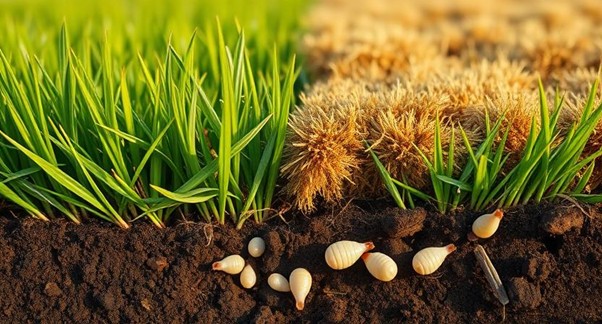
You’re not imagining it. While you’re busy caring for what’s above the surface, mowing, watering, fertilizing, there’s a quiet army working below: the hungry grubs.
Studies show that 5–10 grubs per square foot can live beneath the soil under certain conditions. Think of them as tiny root bandits, stealing your lawn’s strength from underground.
The good news? Grub damage can usually be reversed with the right plan. In this guide, you’ll discover exactly how to get rid of lawn grubs and bring your lawn back to life, starting from the roots up.
Table of Contents
ToggleWhat Are Lawn Grubs?
A lawn grub is simply a baby beetle, the larval stage of scarab beetles such as:
- Japanese beetles
- June bugs
Shaped like a curled letter “C,” these pale, soft-bodied larvae live underground, in the dark and damp layer of soil where they feel safest, and hungriest. They spend this stage of life quietly feeding on your lawn’s roots, long before any damage becomes visible above.
Imagine your lawn as a stage: you handle all the work in the spotlight, while beneath it, grubs are rehearsing their quiet destruction behind the curtain.
Even a well-tended lawn can fall victim to a grub infestation, since these tiny creatures thrive in warm, moist soil and multiply quickly during summer.
Next, let’s look at how they grow and when they cause the most trouble, their seasonal life cycle.
Lawn Grub Development Stages
Before you treat an infestation, it helps to understand how grubs grow and behave through the seasons, their timing is everything.
- Summer: From late June to mid-August, warm soil invites beetles to mate and lay eggs. It’s the start of a silent cycle that will resurface months later.
- Early Fall: The eggs hatch, and baby grubs begin feeding nonstop on grassroots. This is when your lawn is most at risk, the roots weaken even as the grass above still looks healthy.
- Winter: As temperatures drop, grubs dig deeper to escape the frost. They lie dormant underground, waiting for the soil to warm again.
Spring: Warmer days wake them up, now larger, hungrier, and ready to finish what they started. Your turf, meanwhile, begins to show the first signs of last year’s hidden damage.
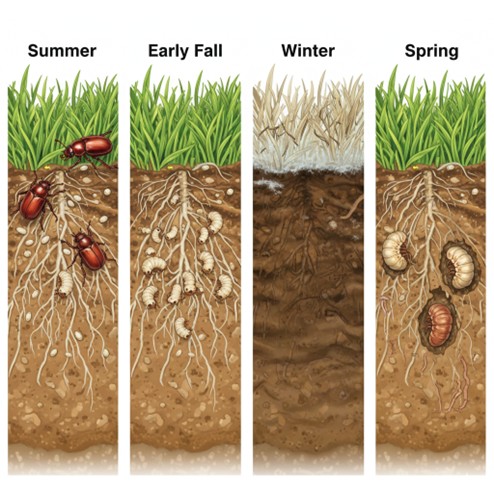
Think of this cycle as a slow-moving wheel: if you know when it turns, you’ll know exactly when to stop it.
Next, let’s explore the 10 proven ways to get rid of lawn grubs, from natural methods to targeted treatments.
10 Proven Ways to Get Rid of Lawn Grubs
Lawn grubs can be managed effectively with the right plan. Some homeowners prefer organic solutions, while others rely on chemical options when infestations are severe.
This guide covers both, so you’ll know when and how to use each method for the best results.
Let’s walk through the most effective grub killer options and natural grub control techniques to help your lawn bounce back stronger than before.
1. Kill Grubs Naturally Using Nematodes
Nature always finds a way, and nematodes are proof.
These microscopic roundworms might seem harmless, but once released into the soil, they hunt down grubs with precision. Many lawn experts consider them one of the best natural alternatives to chemical treatments, which can sometimes be harsh or short-lived.
Think of them as your lawn’s invisible army, moving underground and targeting grub larvae one by one.
How It Works
- Heterorhabditis bacteriophora nematodes are the most common species used to control white grubs. They’re sold in gel, powder, or sponge form.
- Apply them during cooler parts of the day, ideally in the evening, since heat and sunlight can reduce their effectiveness.
- Water the lawn before and after application to help nematodes move through the soil. Keep the area moist for about 7–10 days
- Because grubs feed most actively in late summer and early fall, this is the best time to apply nematodes for maximum results.
Once these natural defenders are in place, your soil becomes far less welcoming to grubs.
Next up: another powerful natural grub control, milky spore.
2. Protect Your Lawn Naturally with Milky Spore
Controlling Japanese beetle larvae before they mature is key, and milky spore (Paenibacillus popilliae) is one of the most trusted ways to do it. This naturally occurring bacterium targets grubs underground by infecting them right where they live.
As a natural grub control method, it works with the soil’s ecosystem rather than against it. Once the spores reach the soil, they multiply inside infected grubs, gradually reducing populations over time.
In the right conditions, milky spore can remain active for years, offering long-term protection against new generations of grubs. It’s also considered safe for people, pets, and pollinators when applied as directed.
Imagine it as a harmless “soil vaccine”, once applied, the ground slowly builds natural resistance to grub outbreaks.
How It Works
- Spread milky spore evenly over the lawn, much like sowing seeds, so it can reach the soil layer where grubs feed.
- Water right after application to help the spores move deeper into the ground.
- Apply during warm soil conditions, typically late summer to early fall, when young grubs stay close to the surface and actively feed.
Milky spore works slowly but steadily, creating long-term balance beneath your grass.
Related Read
If you’re struggling with pesky insects such as ants, but can’t seem to stop them from marching across your vegetable patch, our guide explains how. We have gentle remedies that work on ants without harming your plants. Must check!
 Garden Ant Control: How to Get Rid of Ants in Garden Without Harming Plants →
3. Neem Oil is the Real Protector
Neem oil is more than a simple natural extract, it’s a widely used, plant-based product that helps manage several lawn pests and may even reduce the chances of future infestations.
Instead of killing grubs on contact, it works as a natural repellent, disrupting their feeding and breeding cycles so they become far less active.
Think of it as a gentle “nudge” that makes your lawn less appealing to pests over time.
How It Works
- Follow the product label to mix neem oil with water. Shake well until the solution looks cloudy and slightly milky, that’s your cue it’s ready
- Pour the mixture into a garden sprayer and apply it evenly across the lawn, giving extra attention to areas that show thinning or damage.
- Neem oil is a natural grub control that works gradually. Because results aren’t immediate, many homeowners reapply every 7–10 days during active grub season to maintain its effect.
Neem oil keeps your turf on the defensive, especially when used consistently.
4. The Little Soap Trick That Saves Your Lawn
One of the early signs of lawn grub damage is the sudden appearance of small brown patches.
If the turf feels unusually soft or spongy when you walk on it, the roots may be weakened, sometimes by grub feeding, sometimes by other soil issues.
A quick way to check what’s happening beneath the surface is to use a mild dish soap mixture.
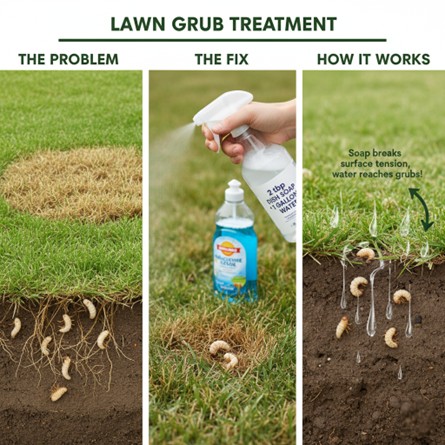
Think of it as a gentle “flush test”: the soap helps lift grubs toward the surface so you can spot what’s really going on.
How It Works
- Mix 2 tablespoons of dish soap with 1 gallon of water. The soap breaks surface tension so the solution sinks evenly into the soil.
- Apply it directly over thinning or browning spots. Within minutes, any grubs present may rise to the surface.
- Use this method sparingly; too much soap can stress grass blades.
This isn’t a long-term fix, but it’s a safe, chemical-free way to inspect your lawn before turning to stronger treatments.
5. Allow nature to take the lead
Nature can manage many pests on its own, as long as the environment stays balanced.
With just a few mindful choices, healthy soil, proper watering, and natural biodiversity can work together to create a lawn where beneficial species thrive.
When the ecosystem is in balance, insects, birds, and soil organisms build strong foundations underground, each playing a part in keeping your lawn resilient.
Imagine it as a small neighborhood where every resident has a job, and together, they help keep grubs in check.
Ways to Attract Them
- Start small: add a birdbath or feeder. Placing them near taller grasses or at yard edges helps birds feel safer.
- Plant flowers such as lavender, daisies, and marigolds. Besides adding color, they attract pollinators and pest-eating insects like lacewings and ladybugs.
- A pond isn’t necessary; even a shallow water container can draw frogs, bees, and birds, natural allies against grubs
- Reduce chemical pesticide use whenever possible. It protects the soil and the beneficial species that help maintain balance.
Letting nature do part of the work builds a strong foundation beneath your lawn.
6. Stay on top of lawn upkeep
Lawn maintenance is crucial. When regular care slips, grass can grow unevenly and slowly lose the resilience that helps it handle stress.
Weeds and pests may begin multiplying quietly, and weakened turf makes it easier for beetles to lay eggs and for grubs to develop beneath the surface. Over time, their feeding may damage roots, making watering and fertilizing less effective.
So, lawn upkeep is more than just about appearances, the real purpose is protection, like giving your lawn a simple everyday shield.
- Mow strategically: Keep your grass around 3–4 inches tall. Taller grass helps shade the soil, lowering its temperature, which can slow weed germination and reduce pest activity.
- Water deeply but not too often: Overwatering can weaken roots, while deep, infrequent watering encourages stronger root growth and makes it harder for grubs to thrive.
Staying consistent with these basics helps your lawn remain stronger and less inviting to grubs.
7. Chemical Grub Killers (for Severe Infestations)
Chemical controls are usually reserved for severe infestations, especially when natural methods haven’t been effective. These synthetic grub killers move into the soil to target active larvae and support your lawn’s recovery.
There are two main types of chemical treatments:
- Curative treatments: Used when grubs are actively feeding on turf roots. Products containing carbaryl or trichlorfon act relatively quickly to stop or reduce grub activity.
- Preventive treatments: Designed to stop future infestations by preventing beetle eggs from developing into larvae. Products with chlorantraniliprole or imidacloprid are commonly used for this purpose
How to Use:
- Apply when beetles have finished laying eggs, usually in late summer.
- Water thoroughly after application so the active ingredients reach the root zone where grubs live.
- Avoid walking on the treated area until the grass has fully dried. Follow product label instructions for re-entry times, especially for children and pets.
- Always read and follow the product label carefully, as application rates and safety precautions vary by brand.
Note
Some chemical products may pose risks to beneficial insects and pollinators. Apply only when necessary and in accordance with local environmental guidelines.
8. Dethatching and Aeration
Grubs often hide and feed quietly beneath thick layers of thatch. To make your lawn less inviting, start by dethatching to remove excess buildup, then follow with aeration to strengthen the soil and encourage healthier roots.
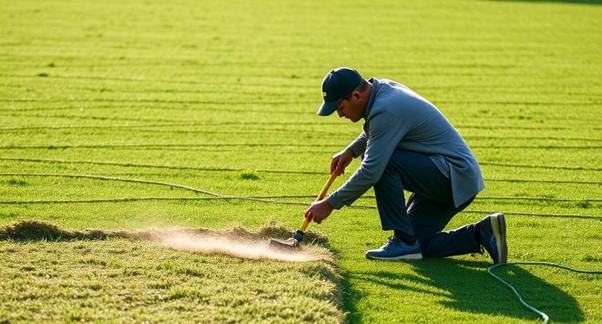
How to Fix:
- A dethatching rake works best for removing dense thatch. Work in small sections to ensure even coverage and avoid stressing the grass.
- The goal is to help water, air, and nutrients reach deep into the soil. Aeration creates the openings roots need to access these essential resources.
While dethatching and aeration don’t kill grubs directly, they help prevent future infestations by improving drainage and reducing the conditions grubs prefer. These steps are most effective in spring or early fall, when grass growth is active and recovery is quicker.
9. Overseeding Damaged Areas
As new grass grows, it strengthens your lawn’s surface and root system, making it less vulnerable to future grub infestations. Pair overseeding with consistent watering and a thin layer of compost to help your lawn recover more quickly.
Steps:
- Lightly rake weakened areas to prepare the soil for new growth.
- Spread seeds evenly so each spot has a fair chance to establish.
- Add a light layer of compost over the patch and water promptly.
Outcome: A denser, healthier lawn that is naturally more resistant to grub damage.
10. Prevent Future Infestations
Preventing grubs before they appear is far easier than trying to repair a damaged lawn later.
Adopt these simple, long-term habits to protect your grass and lower the chances of reinfestation:
- Use natural grub control methods at the right time of year, such as milky spore or beneficial nematodes.
- Avoid overwatering, moist soil attracts egg-laying beetles.
- Keep your lawn mowed at the proper height to support stronger root systems.
- Check soil conditions each season for early signs of stress or pest activity.
- Maintain overall soil health through aeration, composting, and balanced fertilization.
Prevention works like a steady, long-term safeguard, helping your lawn stay healthier year after year.
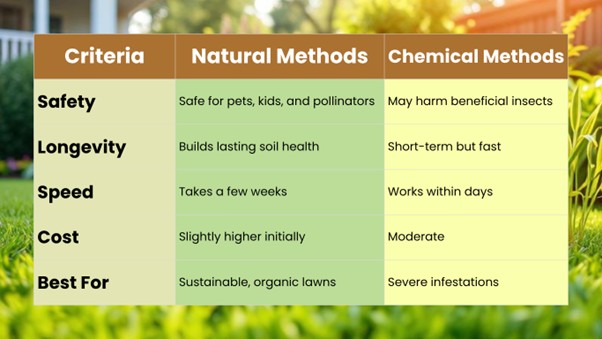
Natural vs. Chemical Control: Which Is Better?
Both natural and chemical grub control methods have their place in lawn care.
Natural options are generally safer for the environment but require consistency, while chemical treatments work faster but should be used carefully and only when necessary.
Bottom Line
Your lawn is more likely to stay healthy and resilient when you consistently use natural grub control methods and practice proper maintenance. Knowing how to get rid of lawn grubs, and when to take action, makes all the difference.
When you spot the first signs of lawn grub damage, respond quickly. Begin with natural, preventive steps to protect your lawn’s foundation, turning to stronger treatments only if you truly need them.
Understanding the problem before reacting leads to long-term, balanced results for both your grass and the environment around it. A little attention at the right time can save your lawn from a lot of trouble later.