


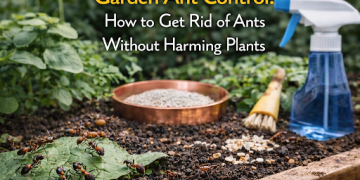

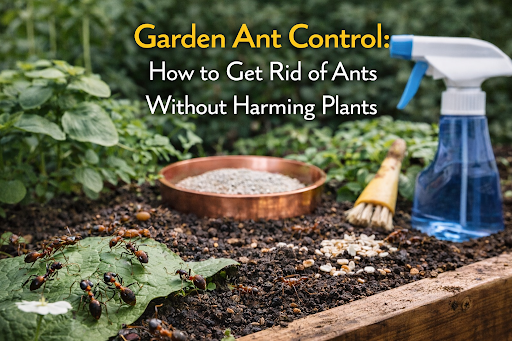
Ants are small, persistent, and surprisingly good at turning a healthy bed into a nuisance.
If you’re searching for how to get rid of ants in garden spaces without torching your plants, you’re asking the right question. Ants rarely “attack” plants in the way other pests do—but they do undermine soil structure, farm honeydew-producing insects, and build mounds where roots need stability and moisture.
The mistake many gardeners make is reaching for harsh, broad-spectrum chemicals. Those products can wipe out beneficial insects, disrupt soil life, and create new problems while “solving” the ant one.
This guide keeps things practical and plant-safe. You’ll learn why ants show up, when they’re actually a problem, and how to reduce ant activity using targeted, lower-risk methods that protect your soil and the helpful insects your garden depends on.
Table of Contents
ToggleWhy Do Ants Appear in Gardens?
Ants don’t move in at random. They settle where conditions consistently work in their favor: reliable moisture, shelter, and steady food sources.
Garden beds often provide all three, especially when soil stays damp, mulch is thick, and other pests are present.
Common reasons ants invade gardens
Ants are generally attracted to:
- Moist soil
- Sweet plant sap
- Other pests like aphids
- Mulch and garden debris
- Cracks in soil or garden beds
A big driver is honeydew: a sugary secretion produced by aphids and similar sap-feeding insects. Once ants find honeydew, they’ll protect the “producers,” expand trails, and reinforce nesting sites nearby. Add shaded mulch, soft soil, and consistent watering, and you’ve built an ideal setup for a colony to grow.
It’s also worth noting: a small number of ants isn’t automatically bad. Light tunneling can improve aeration. The trouble starts when populations expand, nesting becomes disruptive, and ants begin actively protecting pests.
When Ants Become a Serious Garden Problem
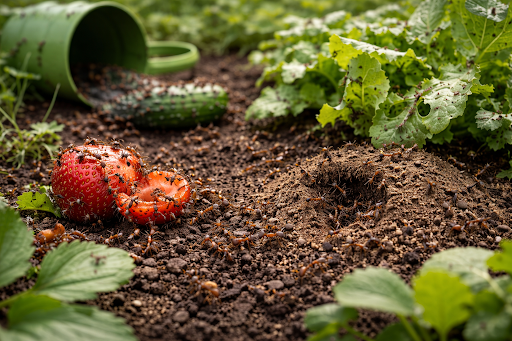
A few ants foraging is normal. A constant stream, especially paired with plant stress, is when you should act.
Established colonies can loosen soil around roots, dry out key zones as they excavate, and create uneven watering patterns. In lawns, mounds can interfere with mowing and create thin patches. In beds, ants often intensify pest pressure by shielding aphids and other sap-suckers from predators.
Common signs you’re past “harmless visitors” include:
- Continuous, heavy ant trails in beds
- Dry, crumbly soil around plant bases despite watering
- Plants drooping or struggling without an obvious cause
- Ant hills appearing repeatedly in the same lawn areas
Understanding Ants and Their Relationship With Other Pests
In many gardens, ants are less a standalone issue and more a symptom of a larger pest ecosystem.
Aphids, scale insects, and mealybugs feed on plant sap and excrete honeydew. Ants harvest it, then repay the favor by guarding those pests from natural enemies like ladybugs and lacewings. Some species will even relocate aphids to fresh growth to keep the honeydew flowing.
That relationship matters because you can treat aphids repeatedly and still feel like the infestation “mysteriously” returns, when ants are defending them. Breaking that partnership is often the turning point for recovery.
How to Get Rid of Ants in Garden Areas Naturally
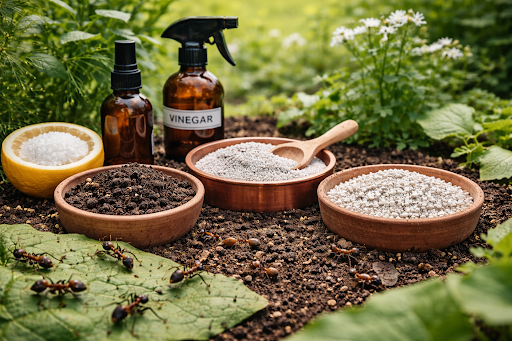
If your goal is fewer ants without collateral damage, start with targeted, lower-toxicity approaches. The best natural ant repellents don’t need to “nuke” the garden, they disrupt trails, make nesting uncomfortable, and reduce colony success over time.
Below are effective options you can use without compromising plant health when applied carefully.
1. Diatomaceous Earth (Plant-Safe and Powerful)
Food-grade diatomaceous earth (DE) is one of the most dependable natural tools for reducing ant traffic. It’s a fine powder, but to insects with exoskeletons, it’s abrasive and dehydrating.
How it works
- It damages ants’ outer shells
- Causes dehydration
- Works without poison
How to use it safely
- Only use food-grade diatomaceous earth.
- Dust a thin layer over ant trails and around mound entry points.
- Apply around plant bases rather than on foliage.
- Reapply after irrigation or rain.
Used correctly, DE is often among the best ant killer for lawns and gardens for gardeners who want a non-chemical approach.
The National Pesticide Information Center explains how food-grade diatomaceous earth is typically used and what “safe use” looks like in real conditions.
2. Neem Oil Spray (Ants Hate It)
Neem oil is best thought of as a behavior disruptor in this context. It can interfere with ant scent trails and help make treated areas less attractive, especially around plant bases and along established routes.
It won’t deliver the instant “drop” some people expect. Instead, it’s useful when you’re aiming to reduce repeat traffic and support broader pest control.
Why neem oil works
- Disrupts ant communication
- Repels ants naturally
- Safe for most plants
How to apply neem oil
- Mix neem oil with water
- Add a few drops of mild soap
- Spray soil, plant bases, and ant trails (avoid drenching blooms)
Neem is also commonly used when aphids or gnats are part of the bigger picture.
3. Vinegar Solution (Use Carefully)
Vinegar can be useful for wiping out scent trails, the invisible “map” ants follow. That makes it a solid option for hard surfaces and garden edges, but it’s not something to spray casually on plants or pour into beds.
What vinegar does
- Breaks ant scent trails
- Confuses ants
- Stops colony movement
Safe way to use vinegar
- Mix equal parts vinegar and water.
- Spray on soil cracks, path edges, and trail zones away from roots.
- Don’t spray on leaves or directly at the plant crown.
Never pour vinegar onto plants or into the root zone. It can damage plant tissue and alter the immediate soil environment.
4. Cinnamon and Spices (Surprisingly Effective)
Ants navigate primarily by scent, and strong aromatic barriers can interrupt that. Spices won’t solve a heavy infestation, but they’re useful for light activity, entry points, and deterring trail formation.
Best spices for ant control
- Cinnamon powder
- Cayenne pepper
- Black pepper
- Cloves
Apply a thin line around problem areas and reapply after rain. This approach tends to work best when you catch the issue early.
5. Boiling Water for Ant Hills (Spot Treatment Only)
Boiling water is effective, immediate, and completely non-chemical, but it’s also indiscriminate. Use it only where you can avoid roots and desirable plants.
When to use boiling water
- Large visible ant hills
- Areas away from plant roots
- Lawn edges
How to apply
- Pour boiling water directly into the mound opening.
- Avoid surrounding turf and plants.
- Repeat if activity continues.
Avoid using this in raised beds, near shallow-rooted plants, or anywhere you want to protect soil biology close to the surface.
6. Cornmeal or Borax Baits (Low-Risk Option)
Baits can help when you’re trying to reduce a colony rather than just interrupt trails, especially if you’re focused on how to control ants in soil where nests are established. The key is placement and restraint: baits work best when ants can carry them back without pets, kids, or wildlife getting into them.
Cornmeal method
- Ants eat cornmeal
- But can’t digest it
- The colony slowly declines
Sprinkle near ant paths, not directly on plants.
Borax bait (use carefully)
- Mix borax with sugar and water
- Place in shallow lids
- Keep away from pets
Borax can be effective, but treat it as a controlled bait, not a product to broadcast across the garden.
7. Beneficial Nematodes (Soil-Friendly Solution)
Beneficial nematodes are a longer-term, soil-based option that fits well in an integrated approach. They’re microscopic organisms applied through watering, and they can target certain soil-dwelling pest stages.
Beneficial nematodes:
- Live in soil
- Attack ant larvae
- Improve soil balance
They don’t harm plants, pets, or people when used as directed, and they can complement other methods that reduce nesting success.
For more on soil-stage pests, How to Get Rid of Lawn Grubs: 10 Proven Ways for a Healthier Lawn offers practical guidance that pairs well with biological controls.
Understanding how to get rid of ants in garden environments naturally means focusing on soil balance and colony disruption rather than instant elimination.
What Chemicals to Avoid in Gardens
Some products will kill ants fast, but at a cost most gardens don’t need to pay. If you’re trying to solve ants while protecting pollinators and soil life, these categories are worth avoiding or using only with extreme caution and clear necessity.
Broad-Spectrum Pesticides
These don’t just target ants. They can reduce beneficial insects like bees, ladybugs, and other predators that keep pests in check.
Synthetic Pyrethroids
Often persistent in the environment, these can affect non-target insects and soil organisms. In a garden ecosystem, that tradeoff is rarely worth it.
Chlorpyrifos-Based Products
Powerful, yes—but not a good fit for home gardens aiming to protect soil life, pets, and people. Choose safer alternatives.
Strong Lawn Insecticides
Some lawn formulations can stress turf and disrupt beneficial insects living in the soil, especially when applied broadly.
These products can harm bees, worms, and other helpful organisms.
Pro Tip
If you want sustainable control, prioritize targeted and plant-safe methods over “kills everything” solutions. Your garden’s natural balance is an asset.
The Environmental Protection Agency (EPA) provides guidance on reducing pesticide risks to pollinators—useful context when choosing any treatment.
How To Prevent the Reappearance of the Ants
Eliminating visible ants is one thing. Keeping colonies from re-establishing is where the real progress happens. Prevention is mostly about removing the conditions that make your beds attractive in the first place.
Fix Moisture Problems
Ants thrive in consistently damp, sheltered soil.
- Improve drainage in garden beds
- Avoid overwatering
- Use well-draining soil mixes
Drier, well-managed soil discourages nesting and reduces the need for repeated treatments.
Control Aphids and Other Pests
If honeydew producers are present, ants have a reason to stay.
- Inspect plants for aphids, mealybugs, and scale insects
- Treat early with plant-safe options
- Reduce ant access so predators can do their job
Breaking the ant–pest relationship often reduces both problems at once.
Keep the Garden Clean
Clutter creates hiding spots and stable nesting zones.
- Remove fallen fruit and decaying plant matter
- Prevent excessive mulch buildup
- Trim plants touching the soil
- Seal cracks in raised beds or garden paths
Pro Tip
These steps work best together. Moisture control + pest control + sanitation is the foundation of long-term ant management.
Seasonal Ant Control Tips
Ant activity shifts through the year. Adjusting your approach seasonally keeps the problem from building into a midsummer headache.
Spring: Stop Them Early
- Check soil and plant bases for early colonies
- Treat small trails before they harden into established routes
- Keep mulch and debris in check
Summer: Keep Pressure Consistent
- Monitor moisture, especially in irrigated beds
- Reapply diatomaceous earth or neem oil as needed
- Watch for aphids and other honeydew pests
Fall: Reduce Nesting Opportunities
- Remove fallen leaves and debris
- Limit nesting spots near plants and lawn edges
- Treat persistent colonies before temperatures drop
Pro Tip
Early-season prevention and fall cleanup usually reduce the need for aggressive midseason interventions.
Are Ants Ever Helpful in Gardens?
Yes, within limits.
Ants can:
- Aerate soil
- Help break down organic matter
- Control some pests
The goal isn’t total eradication. It’s keeping ant activity at a level that doesn’t compromise plant health or fuel pest outbreaks.
Final Thoughts
Knowing how to get rid of ants in garden beds doesn’t require sacrificing your plants, soil quality, or beneficial insects. In most cases, the best results come from a measured approach: reduce nesting comfort, disrupt trails, and cut off the pest partnerships that keep ants invested in your garden.
When you combine natural ant repellents with smart prevention and use targeted options that make sense for your yard, you’ll get steadier, longer-lasting control. Keep the focus on balance: fewer ants where they cause damage, healthier plants everywhere else.