





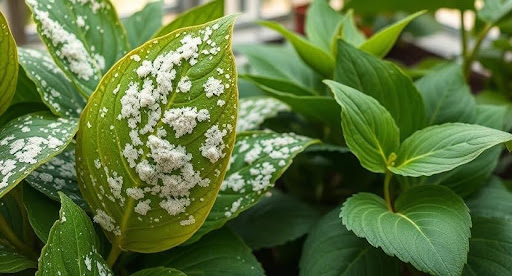
Powdery mildew is a plant disease that affects a wide range of species. It shows little preference, appearing in greenhouses and gardens alike.
This disease is caused by fungal species classified under Erysiphales. The fungus spreads easily, and its spores can move with even the lightest air currents, settling quietly across nearby plant surfaces.
It becomes more active in warm conditions with a bit of moisture in the air. Many gardeners first spot the fine white growth during long, humid days. And while that powdery dust looks harmless, almost like flour brushed on the leaves, it often marks the start of a developing infection.
Early signs can be subtle, but over time the leaves may curl, yellow, and weaken as the fungus progresses.
The good news is that you don’t need to be an expert to stay ahead of it. With a little awareness and consistency, you can learn how to treat powdery mildew and slow its spread before it gains ground.
Jump in Already!
Table of Contents
ToggleWhat Is Powdery Mildew?
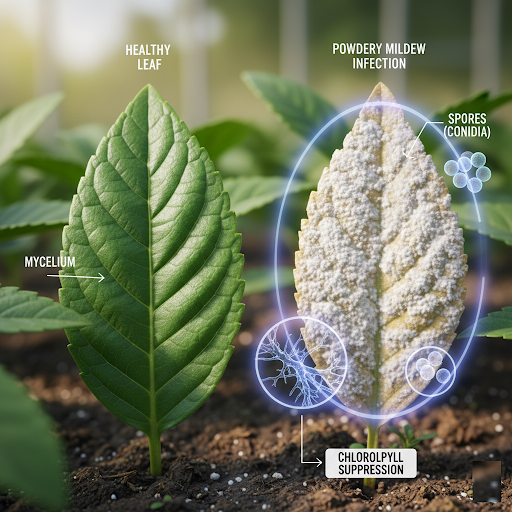
Powdery mildew is a fungal coating formed by networks of fibrous mycelium and conidia. This thin white layer settles on plant surfaces and gradually interferes with normal leaf function.
It is a disease that can spread quickly under favorable conditions. As the infection progresses, mildew weakens the plant little by little. In some cases, it can also affect chlorophyll-related processes, making energy formation less efficient.
One effective way to prevent powdery mildew on plants is to ensure that fresh air circulates around them. Good airflow helps foliage dry faster, reduces humidity buildup, and prevents plants from crowding together, conditions that limit fungal activity.
Unlike many fungi, powdery mildew can still appear in warm, dry weather. Once humidity increases, spores can spread more easily across nearby leaves. Shaded corners with the right warmth and over 95% humidity can quickly become favorable areas for fungal development.
How Powdery Mildew Manifests on Leaves and Buds
Early detection makes it easier to address the issue before it becomes difficult to manage. Watch for the following signs:
- Powdery white or gray patches
- Leaf changes
- Flower and bud issues
- Leaf drop in severe cases
- Fruit and vegetable effects
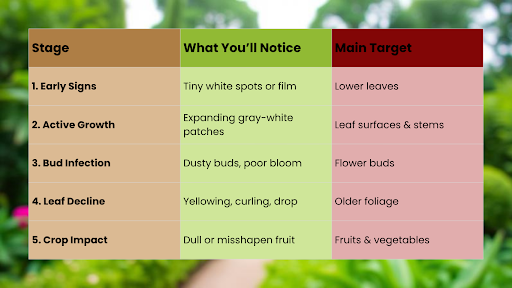
You’ll often notice the fungus through leaf curling, twisting, or yellowing. It usually starts on the lower leaves, where temperatures stay slightly cooler and moisture lingers a bit longer.
Fix: Act quickly with natural remedies for powdery mildew or a fungicide for powdery mildew to help reverse early-stage damage.
Fix
Act quickly with natural remedies for powdery mildew or a fungicide for powdery mildew to help reverse early-stage damage.
Common Causes of Powdery Mildew
One of the main reasons powdery mildew appears is poor air circulation around plants. When airflow is limited, moisture lingers on leaves, creating conditions the fungus can easily exploit.
It also becomes more noticeable in gardens where plants grow too closely together. Crowded foliage traps humidity and makes it harder for leaves to dry properly.
This fungus is additionally opportunistic in shady locations and during weather patterns where warm days are followed by cooler nights. These shifts in temperature can encourage the early stages of fungal activity.
Surrounding conditions that play a role
- Bad Air circulation: Proper ventilation is more than just helpful. When air stays still, moisture evaporates slowly, creating an ideal environment for powdery mildew to grow and spread. Good circulation, however, helps leaves dry quickly and makes conditions less favorable for fungal development.
- High humidity: Humid environments allow spores to multiply more easily. Because plant surfaces stay wet for longer, fungal threads can extend and develop with fewer obstacles.
- Shade: The more time a plant spends in the shade, the slower its leaves dry. Shade reduces radiant heat and limits the natural photoinactivation of spores by UV radiation, a process that can help slow fungal activity.
- Weather: Fungal diseases tend to appear quickly after long stretches of cloudy days. Without regular sunlight, plants don’t dry as fast as they would after morning dew.
Fungi can take advantage of these conditions and may release enzymes that degrade cellulose and pectin. As a result, leaf tissue weakens and may show visible signs such as:
- Curling
- Discoloration
- Premature leaf drop
Other Factors
Helpful nutrients can sometimes become a burden. Overusing fertilizer may push plants into rapid growth, but that speed often comes at the expense of overall health.
When excessive nitrogen encourages fast leaf development, cell walls tend to thin, making it easier for powdery mildew to establish itself.
Watering plants from overhead also plays a role. Doing so keeps leaves wet for longer, and the extended moisture period increases the chance that fungal structures like conidia will germinate and develop, a favorable “sweet spot” for fungal establishment.
How to Treat Powdery Mildew Naturally
There are many effective natural remedies for powdery mildew. Even if the fungus has already caused some visible damage, your plant can still recover with consistent care.
Early recognition plays a big role. Once the disease progresses too far, even chemical treatments may become less reliable.
That’s why many gardeners prefer to begin with milder options. Exploring natural methods first can help slow the issue while giving the plant a chance to strengthen before stronger sprays are considered.
1. Baking Soda Spray
Sodium bicarbonate solution, commonly known as baking soda spray, works best when applied regularly during the earliest stages of fungal activity.
Why it works
Baking soda spray may interfere with key parts of fungal development. It can slow the germination of early-stage fungal cells, and the mildly alkaline layer it creates on leaves and stems makes the surface less favorable for the fungus while supporting the plant’s natural protective epidermis.
Recipe
Mix a small portion of baking soda with water and let the solution sit briefly. After that, it’s ready to use.
Directions
Fill a spray bottle and gently mix the solution so the soda remains evenly distributed. Apply it across your plants, focusing on the areas where moisture tends to linger, conditions that mildew spores prefer.

Pro Tip
You don’t need to drench the entire plant. Prioritize lower leaves and new growth, and apply in the early morning or during cooler evening hours so the solution can absorb more effectively.
2. Neem Oil Spray
The more you learn about Neem oil, the easier it is to understand why so many gardeners rely on it when early fungal signs appear.
Neem oil works not only as a quick defensive spray but also as a supportive treatment that helps maintain plant vigor where fungal activity has begun.
Why it works
The way neem oil functions is well recognized among gardeners. It can help reduce hyphal development, limit spore activity, and support overall plant health, making it a versatile option compared to many common garden products.
Recipe
Mix two teaspoons of Neem oil with a cup of warm water and add a drop of liquid soap to help the solution adhere to leaves and stems.
Shake the mixture thoroughly for a few seconds so the soap distributes the oil evenly. Then spray gently, coating each leaf without soaking it, to help prevent fungal infections from taking hold.
3. Milk Spray (Yes, Milk!)
Milk can be surprisingly helpful for preventing and controlling powdery mildew thanks to compounds like lactoferrin and casein.
These components can help limit fungal growth while supporting the strength of plant cell walls, making them more resilient to infections.
Why it works
Lactoferrin and casein, the active agents in milk, may disrupt fungal reproduction during the early stages of mildew development.
Milk proteins also help create conditions that are less favorable for spores, reducing the fungus’s ability to colonize plant tissue.
Recipe
A cup of milk works well for creating a simple DIY spray that forms a light protective layer on each leaf. You can also add a small amount of diluted apple cider vinegar to make the surface even less suitable for pathogens and mildew to develop.
Chemical Fungicides for Powdery Mildew
When other approaches haven’t made enough difference and the white, powdery coating on your leaves remains, chemical fungicides can serve as a more advanced solution.
Best Chemical Options
Most commonly used fungicide for powdery mildew products include ingredients that act quickly and may provide longer-lasting protection.
Here’s a closer look at how synthetic fungicides help maintain both immediate control of visible mildew and residual activity, an important factor in preventing the fungus from re-establishing on new growth.
1- Sulfur-Based Fungicides
Sulfur is a broad-spectrum fungicide available in several formulations. Whether applied as a wettable powder, liquid suspension, or fine dust, it can help target powdery mildew spores on contact.

Ready-to-use sulfur sprays are commonly sold at local nurseries. Apply them until a light, even layer of sulfur covers both young and mature leaves.
2- Potassium Bicarbonate
When you first notice early signs of powdery mildew, a well-mixed potassium bicarbonate solution can safely treat young shoots, flowers, and mature leaves.
This compound is considered effective because it creates an alkaline environment on the leaf surface. When applied at recommended intervals, that alkaline layer can help neutralize spores before they germinate.
Prepare the solution fresh before each spraying session, as the active ingredients tend to perform best when the mixture hasn’t been sitting for long.
You can reapply it weekly or whenever new growth appears. With consistent use, your plants may develop better overall resistance.
3- Copper-Based Fungicides
Copper sprays can offer protection even when the infection is widespread, as long as they are applied at the recommended intervals. Copper has a long history of use in managing powdery mildew and can be effective on both new shoots and older leaves.
It’s important to follow the correct concentration so new growth is properly shielded before mildew has a chance to develop.
4- Triforine or Myclobutanil
You can prevent powdery mildew on plants by applying triforine. When combined with good cultural practices, such as proper spacing, adequate airflow, and regular sanitation, the effectiveness of the fungicide can improve.
Myclobutanil is known to penetrate leaf tissue and reach areas that are difficult to spray, offering broader coverage. It’s important to mix the solution carefully, as overly high concentrations can damage plant tissues.
Always follow the label directions for both concentration and timing to avoid under- or over-application, which could cause more harm than good.
Related Read
If rust has started affecting your garden or lawn, combining chemical and cultural practices can be helpful. Because rust should be managed before it compromises flowering, fruiting, or aesthetic appeal.
 How to Treat Rust in Lawns →
Preventing Powdery Mildew on Plants
Prevention is always better than relying on chemical treatments once mildew has already reduced the plant’s productivity.
Here are a few proactive strategies you can adopt to keep your plants healthy without introducing residues that may stress or weaken natural growth.
1. Choose Resistant Varieties
Resistant varieties are widely available at nurseries and garden centers. Select the healthiest specimens and consider companion plants that naturally improve airflow.
The more mindful you are of light exposure and air circulation, the lower the chance of mildew developing on leaves and shoots. Some resistant varieties include beans, peas, peppers, lilac, phlox, and dahlias.
2. Ensure Proper Spacing
If plants are too close together, it becomes harder to reduce the chances of spores settling. Thinning overlapping branches is one effective way to improve airflow.
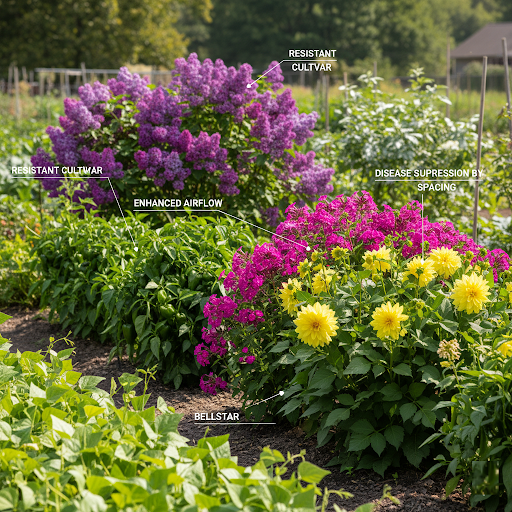
In crowded areas, removing excess leaves and branches can lower the risk of mildew and help plants grow more healthily.
3. Water Early in the Morning
It may sound repetitive, but watering plants early in the morning helps their leaves dry sooner, which reduces the risk of fungal infections.
This simple habit combines hydration with disease prevention while minimizing potential harm to pollinators and beneficial microbial communities. It also shows how consistent, small practices can support natural plant resilience.
Nature Heals When You Act Fast
You can take control of plant health by spotting early signs of mildew and responding promptly. Acting early often helps limit damage before it spreads.
Both natural and chemical treatments have their role in managing fungal and other pest issues. Learning how to treat powdery mildew with a combination of methods not only helps address current damage but also reduces the chances of future outbreaks.
When you step in early, nature tends to meet you halfway.